When it comes to building a strong, resilient body, modern wellness often points us toward synthetic calcium supplements and protein powders. While these have their place, relying solely on isolated nutrients misses the bigger picture of how our bodies actually absorb and utilize them.
For centuries, Ayurveda has offered a more holistic approach to physical development. In the Ayurvedic tradition, bone health is governed by Asthi Dhatu (bone tissue). When your digestion is strong and your body is in balance, the nutrients from your food seamlessly convert into dense bones, strong joints, and healthy physical growth.
Whether you are a parent looking for herbal nutrition for growth for your teenager, or an adult seeking to maintain optimal bone density as you age, nature provides powerful solutions. Let’s dive into the most effective Ayurvedic herbs traditionally used to support bone health and overall physical development.
The Ayurvedic Science of Bone Health (Asthi Dhatu)
In Ayurveda, the body is made up of seven vital tissues (Dhatus), and they nourish each other in a specific sequence. The food you eat first becomes plasma, then blood, muscle, fat, and eventually, bone (Asthi Dhatu).
This means that poor digestion or a lack of specific nutrients can interrupt this chain, leading to weak bones, stunted physical development, or early-onset osteoporosis. Furthermore, bone health is deeply connected to the Vata dosha (the elements of air and space). When Vata is imbalanced, it can dry out the body, leading to brittle, porous bones and popping joints.
To counteract this, Ayurveda utilizes deeply nourishing, grounding, and mineral-rich herbs that pacify Vata, improve nutrient absorption, and deliver essential building blocks directly to the skeletal system.
Top Ayurvedic Herbs for Bone Strength and Growth
Nature’s pharmacy is full of powerful botanicals that do much more than just supply calcium. They improve how your body absorbs minerals, stimulate cellular repair, and balance the hormones responsible for growth.
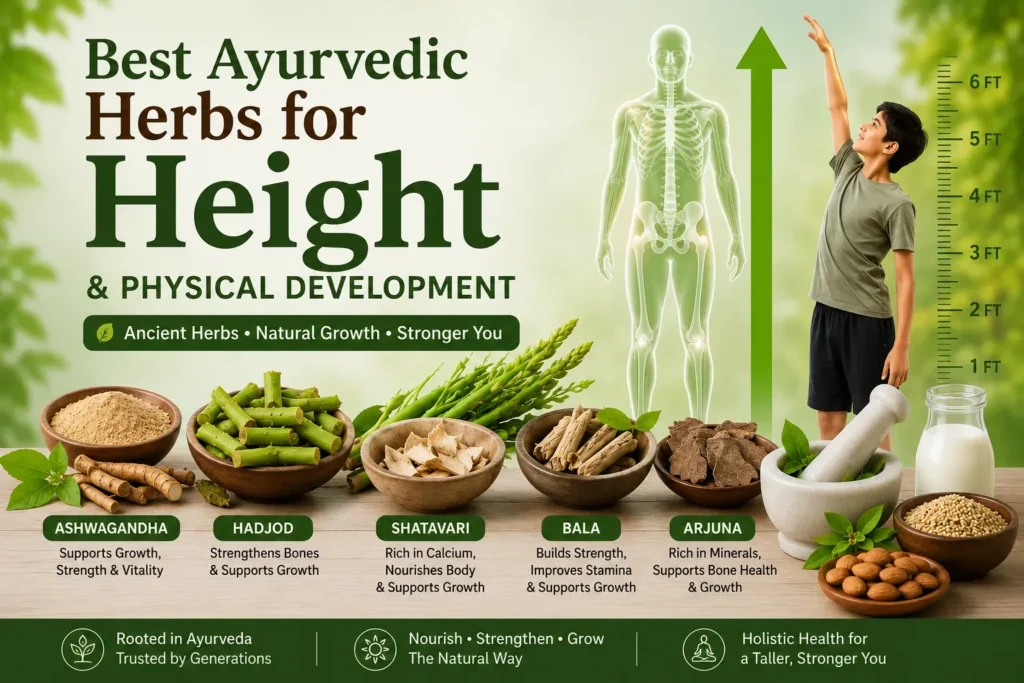
Here is a quick overview of the most potent herbs, followed by a detailed breakdown:
| Herb Name | Primary Ayurvedic Benefit | Best Used For |
| Ashwagandha | Rejuvenation (Rasayana) | Overall growth, muscle tone, and stress reduction |
| Hadjod | Bone Healing (Asthisandhana) | Fracture recovery and increasing bone mineral density |
| Shatavari | Deep Nourishment | Supplying natural calcium and supporting women’s bone health |
| Bala | Physical Strength (Balya) | Strengthening muscles, bones, and overall stamina |
| Arjuna | Mineralization | Providing bioavailable calcium and supporting heart/bone connection |
1. Ashwagandha (Withania Somnifera): The Growth Promoter
When people search for ayurvedic herbs for height, Ashwagandha is almost always at the top of the list. While no herb can magically alter your genetics or make you grow taller after your growth plates have fused, Ashwagandha is incredibly effective during the active growth years (childhood through late teens).
How it works: Ashwagandha is a powerful adaptogen that lowers cortisol (the stress hormone). High stress can stunt physical development. By relaxing the nervous system, Ashwagandha indirectly supports the natural release of Human Growth Hormone (HGH) during deep sleep. It also improves bone calcification, ensuring that as the body grows, the skeletal frame remains dense and strong.
How to use it: Half a teaspoon of Ashwagandha powder mixed into a cup of warm milk before bed is a traditional recipe for promoting growth and deep sleep.
2. Hadjod (Cissus Quadrangularis): The Bone Setter
The Hindi word Hadjod literally translates to “that which joins the bones.” This is one of the most revered herbs for bone strength and skeletal repair in the entire Ayurvedic pharmacopeia.
How it works: Hadjod is rich in naturally occurring calcium, phosphorus, and vitamin C. It stimulates osteoblasts (the cells responsible for building new bone) and inhibits osteoclasts (the cells that break down bone). It is historically used to speed up the healing of fractures and to increase bone mineral density in individuals suffering from weak or brittle bones.
How to use it: Typically taken in capsule or extract form, often paired with a calcium-rich diet for maximum absorption.
3. Shatavari (Asparagus Racemosus): The Calcium Powerhouse
While often known as an herb for female reproductive health, Shatavari is an exceptional, cooling Rasayana (rejuvenating herb) that deeply nourishes the Asthi Dhatu.
How it works: Shatavari is naturally rich in calcium and phytoestrogens. Estrogen plays a critical role in maintaining bone density, which is why women often experience bone loss after menopause. Shatavari provides excellent herbal nutrition for growth and helps prevent the structural breakdown of bones as we age, keeping the skeletal system lubricated and resilient.
How to use it: Often taken as a powder mixed with ghee or warm milk, which acts as a carrier (Anupana) to drive the herb deep into the tissues.
4. Bala (Sida Cordifolia): The Herb of Strength
Bala translates directly to “strength” in Sanskrit. It is an incredible herb for anyone looking to build robust physical health, stamina, and structural integrity.
How it works: Bala nourishes both the muscle tissue (Mamsa Dhatu) and the bone tissue (Asthi Dhatu). It is highly effective in pacifying Vata dosha, making it ideal for soothing stiff joints, preventing bone degeneration, and supporting the natural physical development of athletes and active individuals.
How to use it: It can be taken internally as a powder or used externally as a medicated massage oil (Bala Ashwagandhadi oil) to strengthen the musculoskeletal system from the outside in.
5. Arjuna (Terminalia Arjuna): The Mineral Absorber
Though most famous as a cardiovascular tonic, the bark of the Arjuna tree is a hidden gem for the skeletal system.
How it works: Arjuna bark is extremely rich in bioavailable calcium, magnesium, and zinc—the exact trio needed for healthy bone formation. It improves the body’s ability to absorb and synthesize these minerals from the foods you eat, making it a powerful daily supplement for long-term structural health.
Holistic Lifestyle Tips to Maximize Physical Development
Taking herbs is only one piece of the puzzle. Ayurveda teaches that your daily routine (Dinacharya) dictates your health. To get the best results from these herbs, pair them with the following practices:
-
Sunlight Exposure (Vitamin D): You can take all the calcium and herbal supplements in the world, but without adequate Vitamin D, your bones cannot absorb them. Aim for 15-20 minutes of early morning sunlight daily to naturally synthesize Vitamin D.
-
Abhyanga (Warm Oil Massage): Massaging your body with warm sesame oil before a shower helps pacify Vata dosha. Sesame oil is deeply penetrating and traditionally believed to nourish the bones and joints directly.
-
Weight-Bearing Exercise: Bones grow stronger when they are placed under healthy stress. Practices like Yoga (specifically standing poses), weightlifting, or even brisk walking signal your body to deposit more minerals into your skeletal frame.
-
A Bone-Nourishing Diet: Incorporate naturally calcium-rich foods like sesame seeds, almonds, dark leafy greens, and organic dairy (if tolerated).
Conclusion
Building strong bones and supporting physical growth doesn’t require a cabinet full of synthetic chemicals. By turning to the ancient wisdom of Ayurveda, you can nourish your skeletal system from the inside out.
Whether you are utilizing Ashwagandha as one of the premier ayurvedic herbs for height during your natural growth phases, relying on Hadjod as one of the best herbs for bone strength, or turning to Shatavari for daily herbal nutrition for growth, nature has a remedy. Remember that consistency is key. Pair these powerful botanicals with a mineral-rich diet, daily movement, and plenty of sunlight, and you will lay the foundation for a lifetime of structural health.
Frequently Asked Questions (FAQs)
Do Ayurvedic herbs for height actually work for adults?
Once your growth plates (epiphyseal plates) fuse—typically in your late teens or early twenties—no herb or supplement can make your bones grow longer. However, herbs like Ashwagandha can improve posture, increase muscle tone, and prevent bone density loss, which can help you stand taller and avoid the shrinking effect that happens as we age.
Which Ayurvedic herb is best for weak bones?
Hadjod (Cissus Quadrangularis) is widely considered the best Ayurvedic herb for weak bones and fractures. It specifically targets osteoblast production, helping the body lay down new, dense bone tissue while accelerating the healing of skeletal injuries.
How should I take herbs for bone strength for the best absorption?
In Ayurveda, herbs are rarely taken with plain water. To drive the fat-soluble compounds and minerals deep into the bone tissue (Asthi Dhatu), it is highly recommended to take these herbs with a carrier (Anupana) like warm milk, ghee, or warm water mixed with a healthy fat.
Are these herbal supplements safe for children?
Herbal nutrition for growth, such as Ashwagandha and milk, is traditionally given to children in India. However, the dosage for children is vastly different than for adults. Always consult with a qualified Ayurvedic practitioner or pediatrician before introducing herbal supplements to a child’s diet.